
wood floor cleaning & sealing in essex
Engineered wood flooring is a popular choice in both old and new properties. It is relatively easy to maintain, as new, factory-finished flooring is available in lacquer or oiled finishes.
After some time, both types of finish will require refreshing to maintain the wood's quality and ensure the appearance remains pleasing.
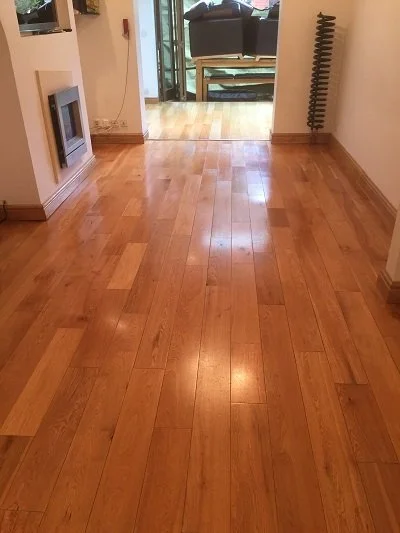
Wood floor finished in Bona Mega Lacquer
Lacquered finished wood floors may involve more maintenance as the seal wears. Depending on the level of wear, the floor may require sanding to remove the entire surface seal and the wood surface before applying new lacquer.
There is another maintenance option for lacquered wood floors with only light wear on the surface lacquer. That is a non-sanding deep clean of the surface by machine, then enhancing the existing seal with a coat or two of new lacquer.
The cleaning process for this type of maintenance is a controlled wet clean, thus avoiding the dust and mess created by sanding. It should only be carried out by a professional wood floor cleaning service, as there is always a danger to the floor if the correct method is not strictly adhered to.
This type of service can save a lot of time, upheaval, and costs compared to sanding a wood floor for restoration.
The floor-cleaning process commences with a controlled amount of a chemical-water mixture applied to the floor. Then, using a specialist rotary cleaning machine with an adjustable weight, a coarse nylon pad is fitted to the machine. The pad with the correct weight can both clean the floor surface and abrade the existing lacquer seal.
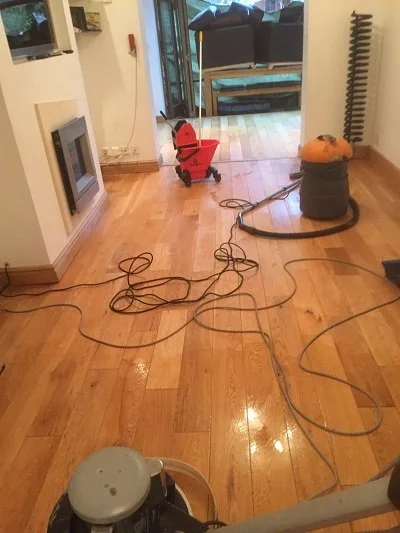
Non-sanding wood floor cleaning
The existing seal or lacquer requires light abrading to provide a key so the new coats of lacquer adhere to the old.
The machine operator completes cleaning a small section of the floor, immediately followed by removing the slurry left over from the cleaning process with a wet vacuum.
The slurry cannot remain on the surface; otherwise, there is a real danger that it will soak into the unsealed wood flooring, causing swelling of the wood or joints, and in some cases, the boards may warp.
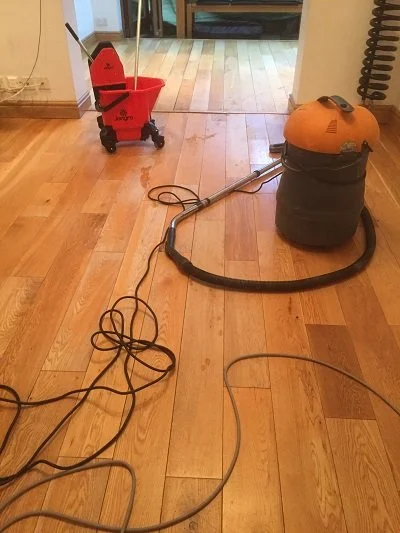
Non-sanding cleaning stage completed
With the surface slurry extracted, the floor will require naturalisation by mopping several times to remove any remaining chemical residue, completing the cleaning process.
Another important aspect of the cleaning operation is drying of the wood. Do this as quickly as possible after the damp mopping is complete. The best method is to use a mechanical dryer, which assists and speeds up the process.
Once the wood floor surface has been cleaned and prepared, the new lacquer seal is applied using a roller or a dry flat mop.
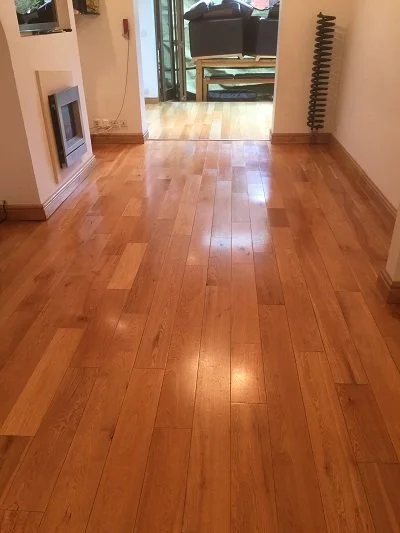
Lacquered Wood Floor
With an oiled wood floor, cleaning and re-oiling can be straightforward, provided the soiling or stains haven’t penetrated too deeply into the grain of the wood.
The examples here are before and after cleaning and re-oiling of an oiled finished oak.
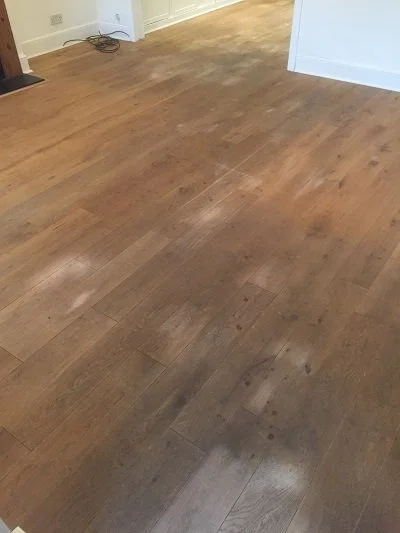
Dirty engineered oiled oak floor
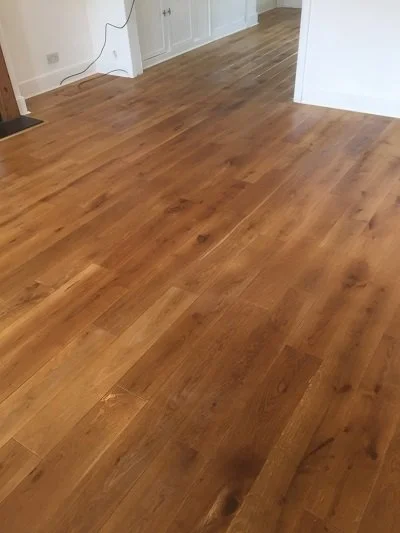
Cleaned and oiled by Simply Floor Cleaning, non-sanding method.