
Is It Safe To Clean Wooden Floors with a Steam Mop?
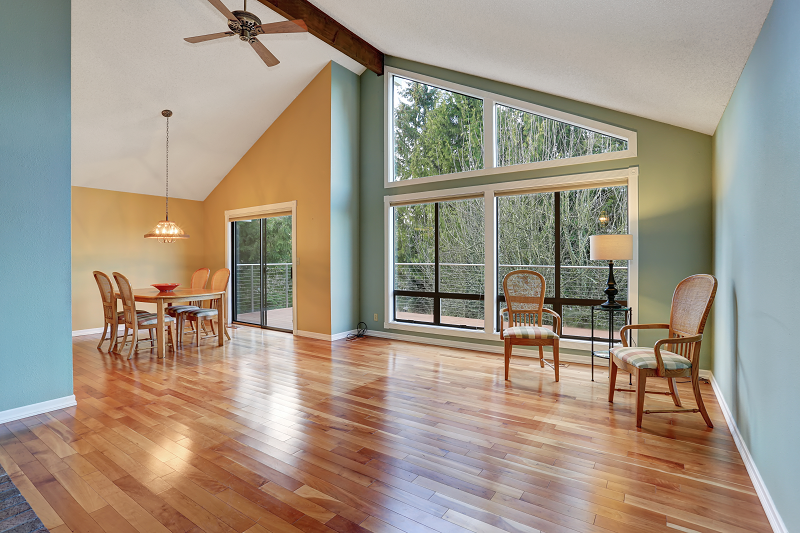
Lacquered Wooden Floor
We are asked regularly whether steam mops are safe for cleaning wooden floors. Our opinion and advice to our customers is, don't use one.
Here's why.
Customer: I have just spent £ xx on a new steam mop, and the manufacturer recommends it for cleaning hardwood floors.
Why you should not use one: Steam mops heat water to the point of boiling, creating steam that is then released under pressure onto a pad in contact with the floor surface. One reason people like to use steam for cleaning is that it is an environmentally friendly method, eliminating the need for chemicals.
This is true to some extent; pressure cleaning with steam on grout or ceramic tiles is an effective way to clean those surfaces. Cleaning heavily soiled tile and grout will require more than just steam to shift the accumulated dirt.
There is a whole range of issues that may arise if you use this process during hardwood floor cleaning.
Steam mops often leave excess water on the floor surface. If water is left to penetrate a wood floor, it can cause the grain to rise, expand, and split, or, worse, the wood to warp completely out of shape. The danger of the steam also finding its way into the grain of the wood during cleaning is also high.
Hardwood floors sealed with a polyurethane coating or varnish should be able to withstand surface moisture better than an unfinished floor. Some manufacturers will advise that using steam mops on a low setting is safe. However, seals do wear over time, and even small areas of damage can cause a break in the surface protection. If water or steam gets into these exposed areas, it will be absorbed into the wood beneath the seal and will not be able to dry adequately because the surface above is sealed. This may cause staining or discolouration and force the wood to expand, further opening the seal.
Even engineered hardwood floors that are factory-finished and sealed have a chance that, during installation, the fitter may leave very small gaps between the boards where steam can penetrate. It can get directly to the sub-base of the finished wood laminate layer. This will often be constructed of a material less resistant than the sealed-surface wood to repel moisture or steam.
Not all hardwood floors are sealed with polyurethanes or varnishes. In fact, many modern engineered wood floors sold today are finished with oil or a mixture of oils and waxes. This gives the finished wood floor a more natural appearance and allows the wood's texture to be appreciated rather than sealed in.
With Oiled Hardwood floors, a steam mop could partially remove the oil or wax protection or cause it to break down at a faster rate. This will cause the surface wood to lose its protection and wear more rapidly.
Hardwood floor cleaning, when undertaken, should be approached with caution; excessive water or steam may damage the floor. Manufacturers’ warranties will normally specify a maintenance regimen for cleaning and treating the floor. Be cautious if that regime does not approve the use of steam mops, as the warranty could be voided.
For expert advice, contact us on 0800 1013105, or submit your photos and measurements for a quote.