
Vinyl flooring Cleaning in Southend On Sea
Vinyl flooring comes in several different finishes and a wide variety of colours, patterns and textures.
The most common form is sheet material, which is used in both large and small areas. Other types include tiles and, more recently, vinyl in plank form that replicates floorboards.
All types are resilient and hard-wearing and have long been a popular choice for areas with high foot traffic.
Large areas such as halls, corridors and exhibition centres often use smooth sheet vinyl. It is easier to clean and maintain than safety flooring, which, due to its non-slip qualities, attracts soiling that is harder to remove without mechanical help.
The floor in our study is a well-used, typical example of a vinyl floor laid more for practicality than aesthetics.
It serves the Southend-on-Sea Air Cadets. With all the hectic activity and squadrons constantly drilling and training, it gets more than its fair share of wear and tear.
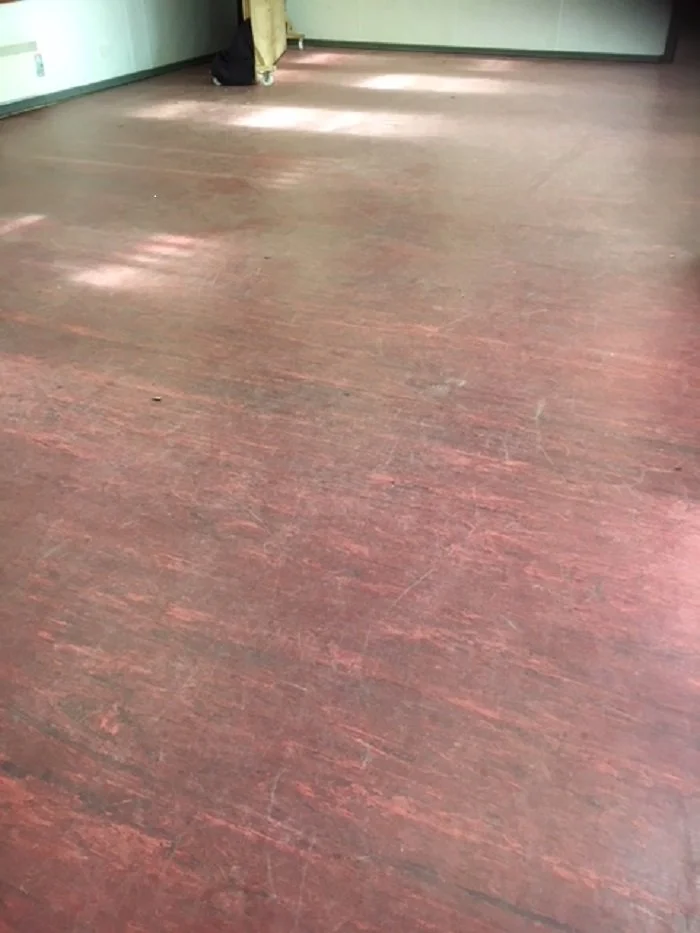
Dirty and scuffed vinyl flooring (Before)
The vinyl flooring, as you can see in the before photograph, is heavily worn and has suffered many scratches and other surface damage.
With over 160 square meters to deep-clean and seal, we had our work cut out.
The first order of business, as always, is to identify which previous products have been applied to the floor. Often in this type of work, there is a build-up of old products such as sealers or polishes.
Removing many layers of old sealer can be difficult and will require specialist chemicals and heavy-duty mechanical aids. For all types of floor polish stripping, great care is needed in both handling and applying the chemicals.
Too much, and the floor could easily become discoloured; too little, and the task could take days to accomplish.
At Simply Floor Cleaning, we have restored some of the worst cases of excessive polish buildup that I have witnessed in a career spanning more than 30 years in commercial floor cleaning.
Once the chemical solution has been mixed and applied to the floor, it is essential to keep the floor wet so the solution remains active.
Mechanical cleaning of the flooring is then required to penetrate the surface layers and reach the vinyl surface.
The vinyl is often worn and scratched, so deep cleaning is imperative to remove soiling and embedded products, and to collect and effectively remove the slurry from the vinyl surface.
The cleaning process must be thorough, often requiring several passes with the machine to loosen and remove embedded soiling.
The other part of the deep clean method is to effectively collect and remove the slurry left by mechanical cleaning.
A powerful wet vacuum effectively removes the mess, leaving the floor ready for rinsing.
Rinsing with fresh water removes any remaining soiling and also neutralises and removes any chemical residue left from the cleaning process.
As with this floor, the flooring will then require a polish or sealer to protect the surface from further ingress of soiling into the worn area.
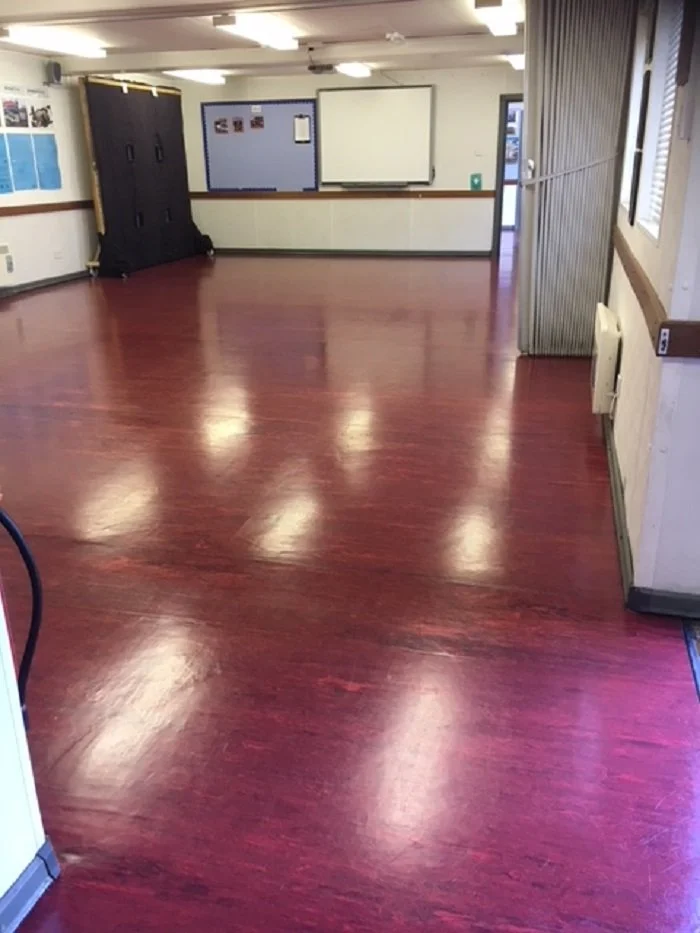
Vinyl floor cleaned and restored (After)
This particular job was completed within one working day, and you can see for yourself the transformation that took place.
Periodic cleaning is required for this type of floor, and by employing a specialist floor-cleaning company, even heavily soiled and worn vinyl floors can be restored to an astounding finish.