
Limestone floor polishing
Limestone flooring has become one of the most popular stones used in residential properties due to its natural qualities, beautiful appearance, and increasing availability.
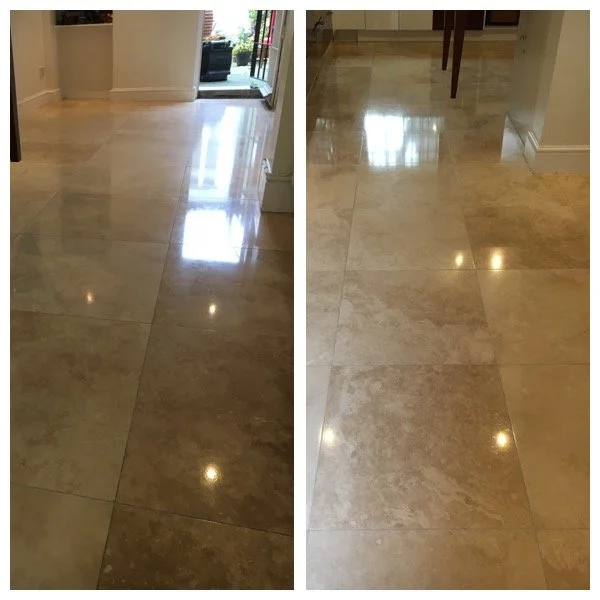
Limestone floor polishing
Every tile cut from the stone is individual, each with its own distinctive character. On closer inspection of the detail, the limestone floor that appears uniform is, in fact, a wide variety of composites pressed into the sedimentary rock over millions of years.
When the limestone floor is polished, the individual details become even more highlighted. It is common to find partial and sometimes whole fossils embedded in the stone.
Limestone flooring typically comes in two levels of finishing. One type of finish, known as a tumbled finish, has the appearance of unpolished stone; it looks very natural and is a popular choice for those who wish to create a softer look in their home.
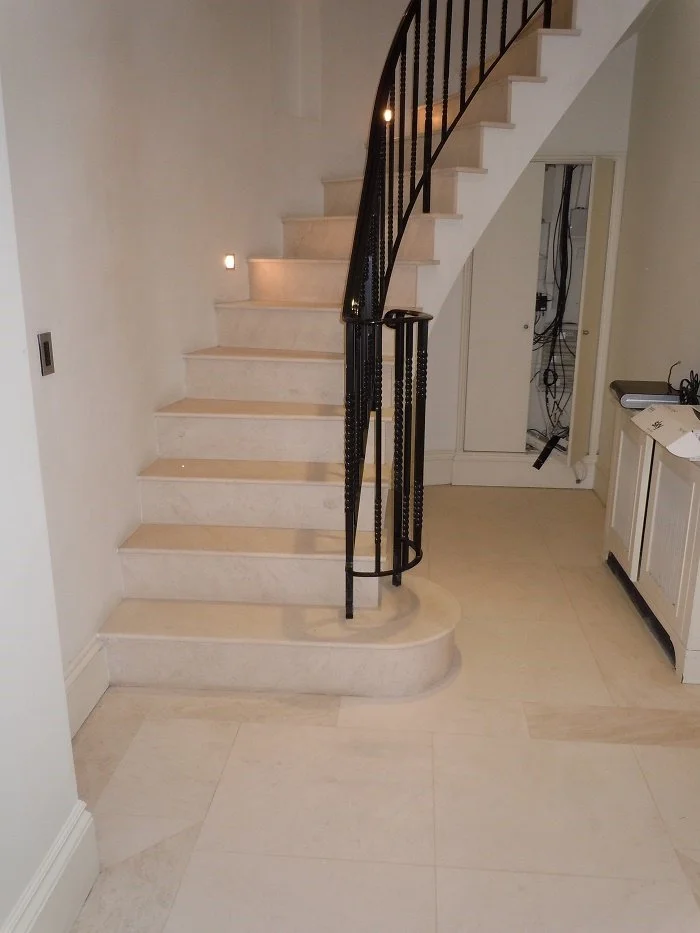
Limestone staircase
The other type is highly polished. This appearance really showcases the stone's makeup. Tiny details become highlighted in the depth and richness of the finish.
A stone floor is hard-wearing and will last for many years. The appearance will depend on the quality, finish, and care and treatment applied.
Like all natural stone, it will be prone to wear or erosion. Protecting the surface can help ensure it continues to look good and minimise wear.
Regular limestone floor cleaning is essential for removing the fine grit and dirt that accumulate on the surface. Cleaning will also remove soiling and keep the stone visually appealing.
Periodically, limestone floors will require more intensive cleaning to remove soiling or staining that has penetrated the stone's pores.
Deep cleaning is mechanical cleaning using a specialist rotary floor cleaner with adjustable weights and diamond cleaning pads, or light resurfacing of the stone. The process completely refreshes the appearance and restores the finish to the level of cleanliness that it was when first laid.
Diamond floor-cleaning pads, ranging from coarse to fine, clean the floor in stages to reach its desired finish.
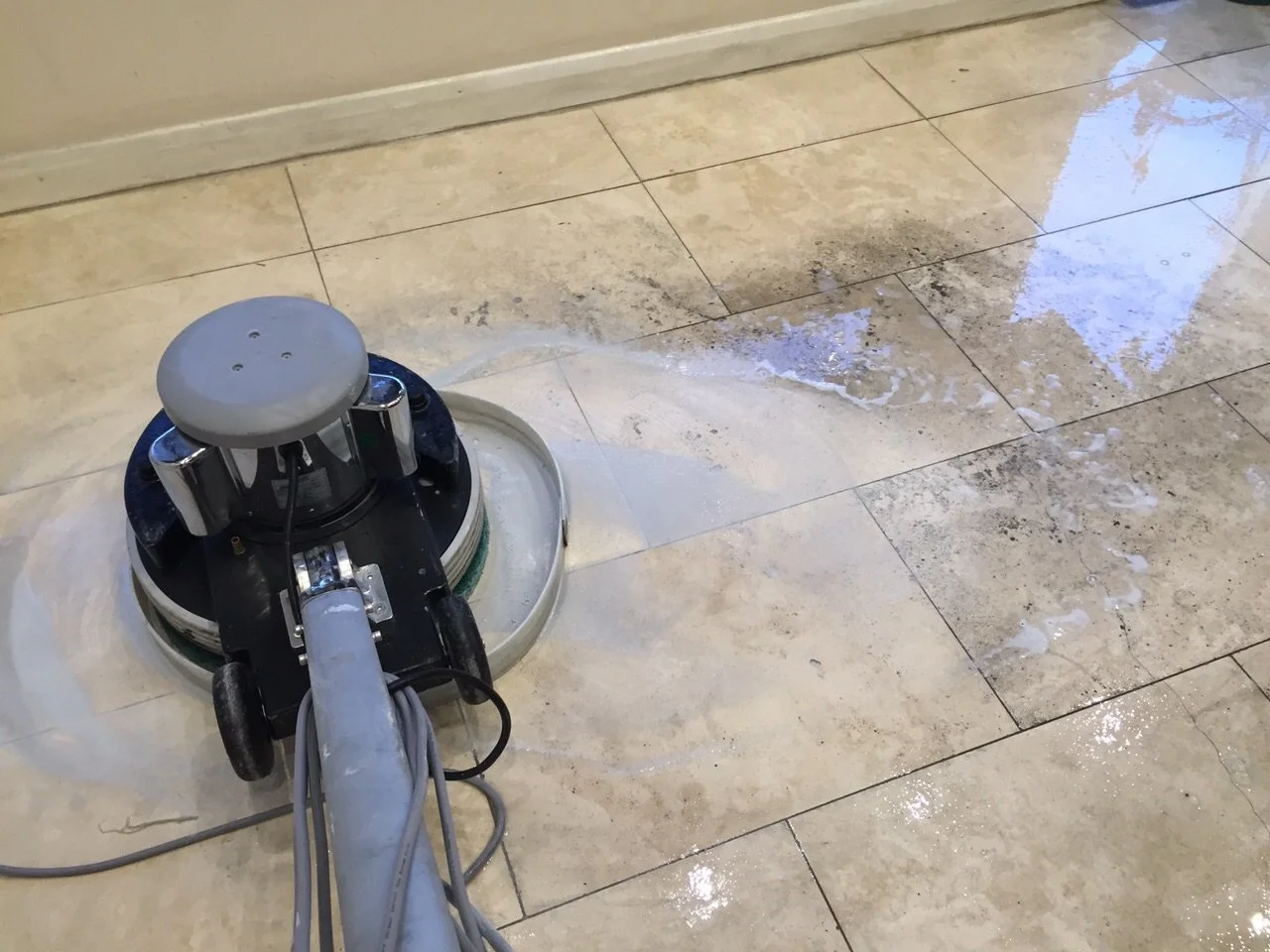
Cleaning a stone floor with a diamond cleaning pad
Once the cleaning process is complete, sealing the limestone is required to prevent ingress of staining. Limestone is a porous material, and if left unsealed, it will quickly absorb spillages into the surface.
The preferred method for sealing stone is to use an impregnating sealant. This type of seal is absorbed into the stone, creating a barrier just below the surface so stains cannot penetrate it. The surface appearance is unaffected and should remain neutral.
Limestone can then be polished to restore its previously polished surface and the depth of its previous shine.
Stone polishing powder mixed with water forms a paste, which is then applied to the floor using a weighted rotary machine. The polishing process is slow, with rhythmic passes at a controlled speed. With the machine's weight, the powdered paste reacts with the stone's surface, polishing it.
With the residue extracted, the limestone polishing is complete. The results are outstanding, and the floor is restored to a vibrant, tough, and beautiful, ready-to-use surface once again.
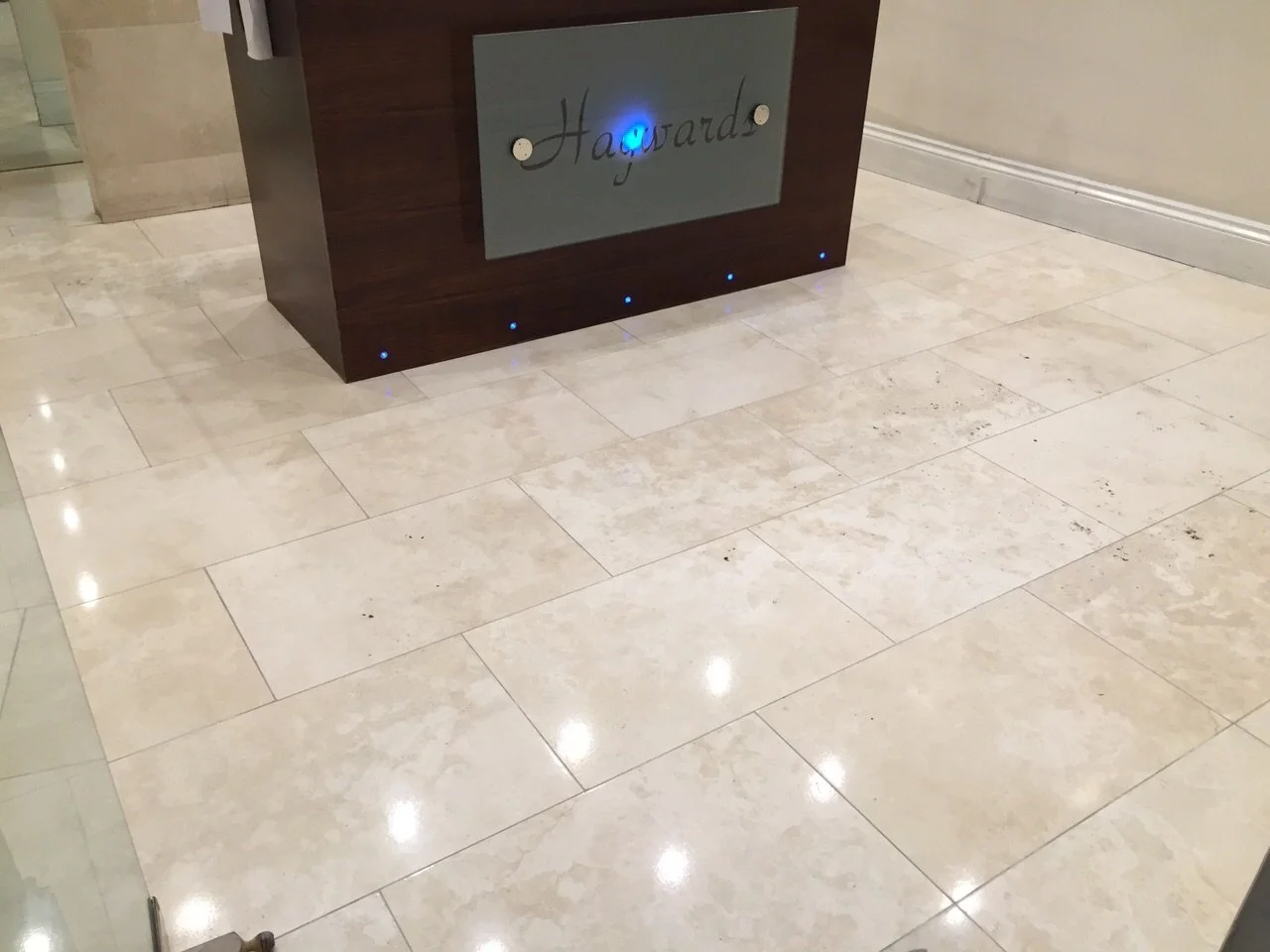
Limestone Cleaning