Slate Floor Cleaning in Chelmsford
Cleaning slate after building work
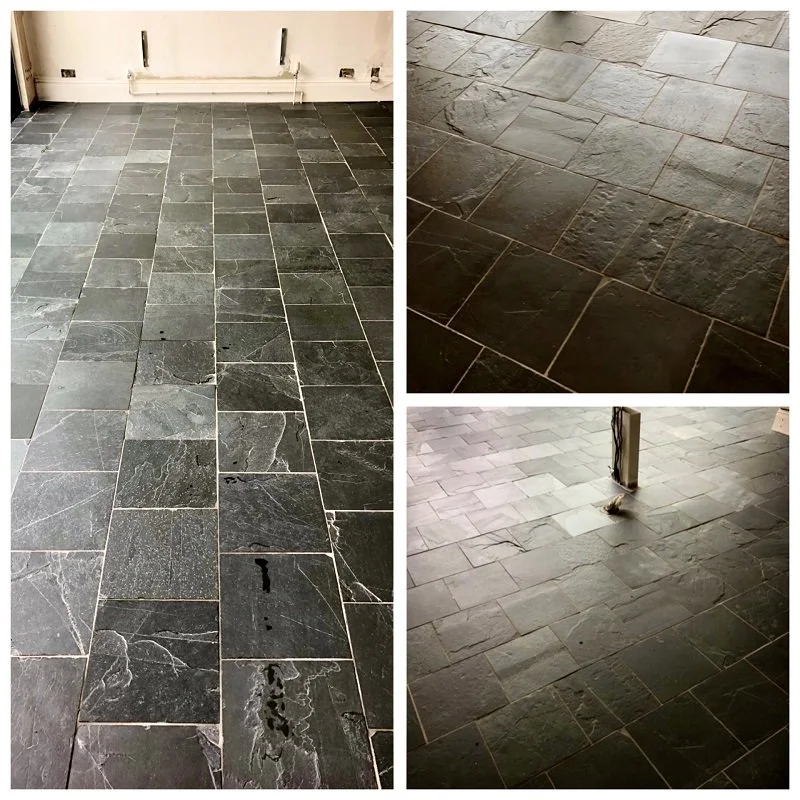
Often during building works slate flooring becomes saturated with a mess. Even with protective measures in place, gypsum dust and cement residue find its way through to contaminate the flooring.
When a slate floor has suffered this amount of building mess there is usually only one solution for slate floor restoration and that’s deep cleaning.
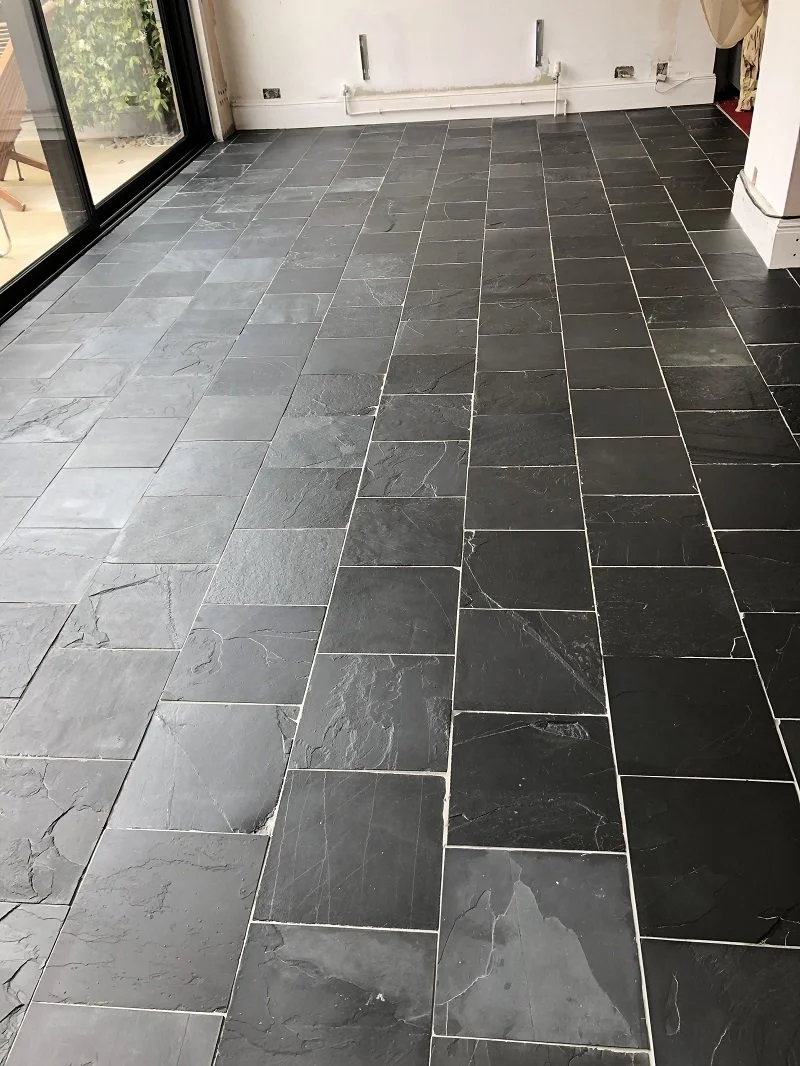
Our clients in Chelmsford had undertaken an extension project to the rear of the property and had to match up an area of new slate flooring with the originally fitted slate. After some walls were knocked down and new building works completed the amazing transformation. They scheduled us to restore the floor before the new kitchen was fitted.
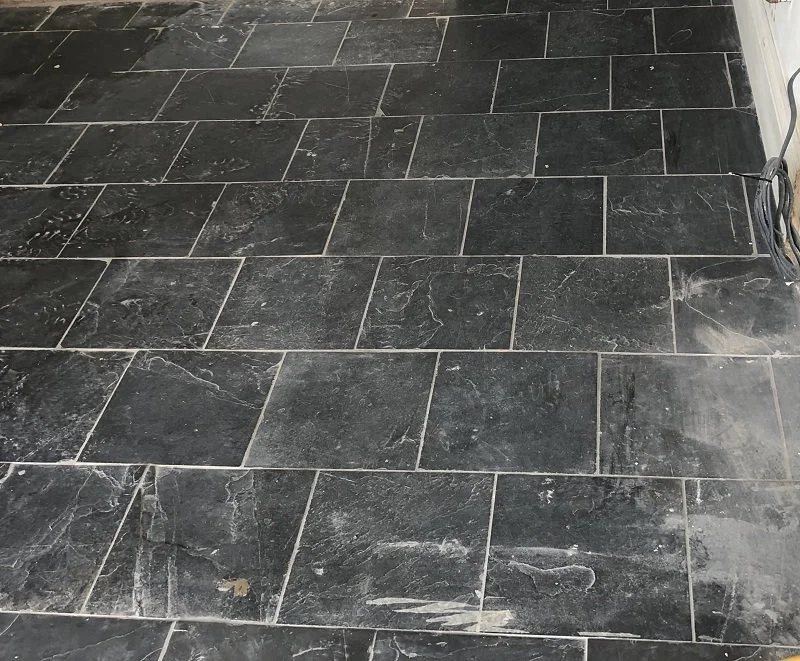
The first stage of the work was to eliminate the building mess that was embedded in the floor. Gypsum, cement, and other products like grout adhere to the slate surface and get trapped in the crevices and ridges. Normal cleaning doesn’t touch this level of debris which often bonds to the slate. In these circumstances, a mild acid wash is required to help dissolve the aggregates that are present during building works.
Applied in a controlled mixture, the solution activates on the slate and begins to dissolve the aggregate, loosening its grip on the surface. Mechanical cleaning starts with a rotary floor scrubber fitted with a medium strength nylon scrubbing brush. The weight of the machine combined with the scrubbing power frees the majority of the mess and the resultant slurry is captured and extracted with a powerful wet vacuum.
A proportion always escapes even the combined effort of the chemicals and the intense cleaning, and that is dealt with by detailed hand cleaning.
Once the majority of the builder’s residue is removed the next stage is to clean the surface slate and remove any old sealants which have eroded through natural wear or from the onslaught of intense building works.
This stage is approached in a similar method with mechanical cleaning but employs a fitted pad in place of the medium brush. The solution required is a cleaner/stripper, which performs a different function to the acid wash. The rotary floor pad agitates differently and provides a closer connection on the slate surface. Once the old sealant and ingrained and embedded dirt are freed, wet extraction removes the residue.
The method described above employs several strong chemicals and a high level of expertise is required to undertake this type of professional floor cleaning.
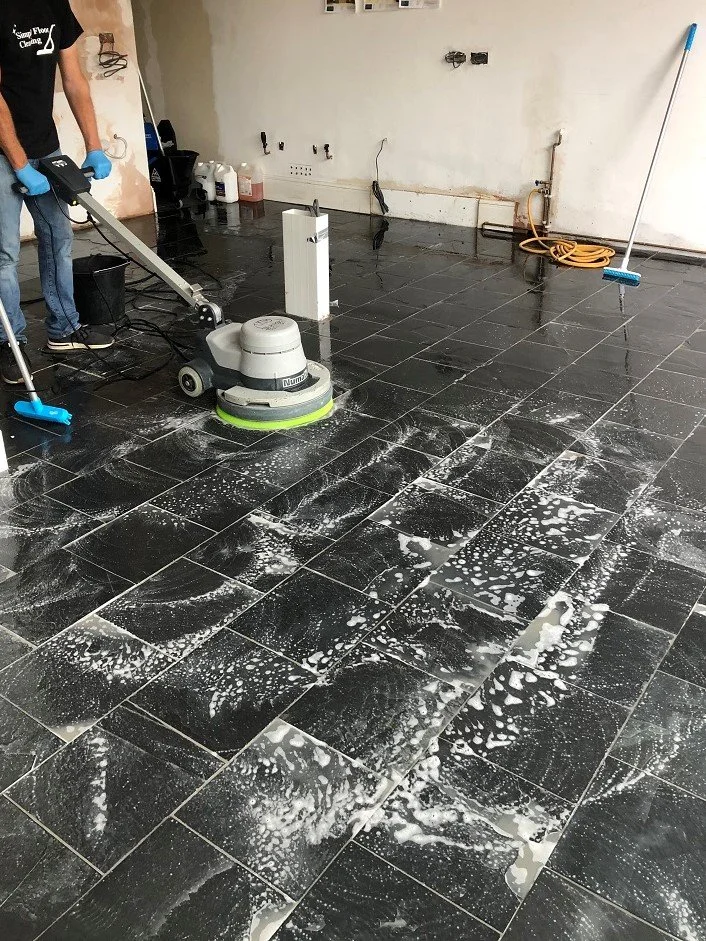
With the cleaning aspect of the job completed attention shifts to the next crucial stage, neutralization. A lot of chemicals have been used and it’s essential to neutralize the surface thoroughly before any further work can proceed. Using freshwater, the surface requires several washes to remove the entire residue. It’s not uncommon for us to wash the floor four to five times and ensure we change the water every five to ten square meters. It’s a lot of buckets to fill and empty, but it’s essential.
Once the slate has been fully prepared it has to be entirely dry before any sealers can be applied. We use a large mechanical floor dryer and check that the entire surface is ready before applying the enhancing floor sealer.
There are various methods of application; however, with slate floor sealing we take a somewhat old fashioned approach. It is labor-intensive to apply the sealer by hand with cloths, but our standards are the highest achievable. Working the sealer into the crevices and layers of the slate ensures full saturation and an outstanding finish.
If you require our help deep cleaning and restoring a slate floor, we can provide an estimate without the need for a site visit. By simply uploading some photos and measurements in our Get A Quote form, we will assess your job and provide recommendations and costs.