Restorative Tile & Grout Cleaning
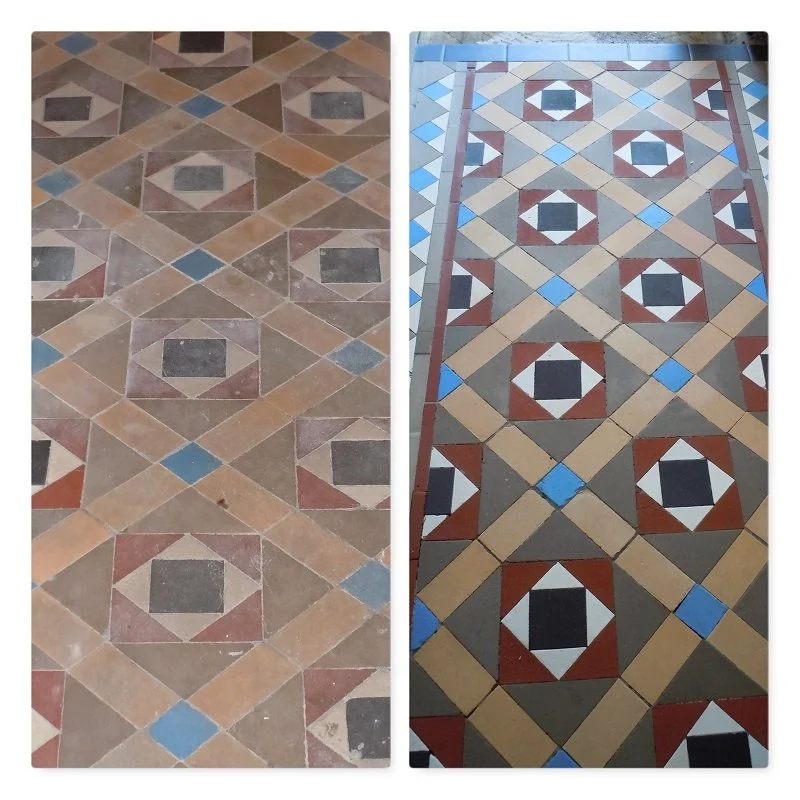
Over the years, the practice of scrubbing the tiles on one’s hands and knees has lost its allure. Soiling penetrates the porous surface of the tile, and old coverings like wax have degraded, allowing the surface to become impregnated with dirt.
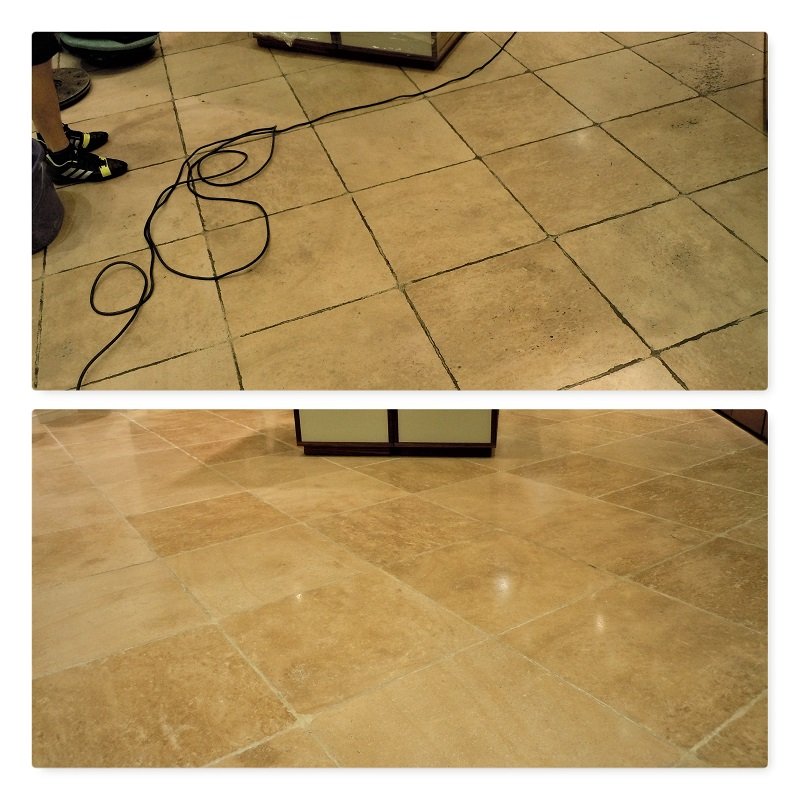
When the surface appears dull and filthy, as in the photo, a tile deep clean should deal with most of the issues; however, some of these aggregates may not be completely removable. A light resurfacing on some types of tiling is possible but should be cautiously undertaken to avoid eradicating colouring and detail.
Some floor surfaces are more susceptible to damage. Sealed stone and slate floors often lose surface protection from the effects of limescale in the water. If left untreated, limescale will etch into the stone surface and damage it.
There is a range of solutions to this issue, from spending a few pounds to purchase a limescale remover to buying and installing a system that filters and treats your entire water supply.
If your floor looks like the one in the above photo and you want restored, you need a specialist floor cleaning company to help.
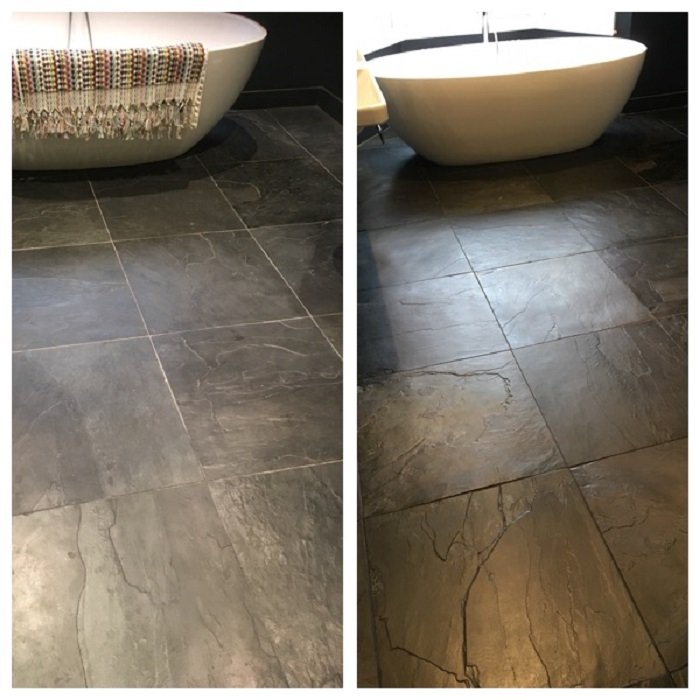
Before attempting tile and grout floor cleaning, it would be a big help if you first identified the tile. The repeated pattern is one of the giveaway signs on ceramic or porcelain that seems to be stone. In addition, specific acid or alkaline-based chemicals can damage natural stone. Therefore, it is advisable to check first if strong chemicals are used or hire a professional floor cleaning service.