Tile and Grout Floor Cleaning – Identify your Tile
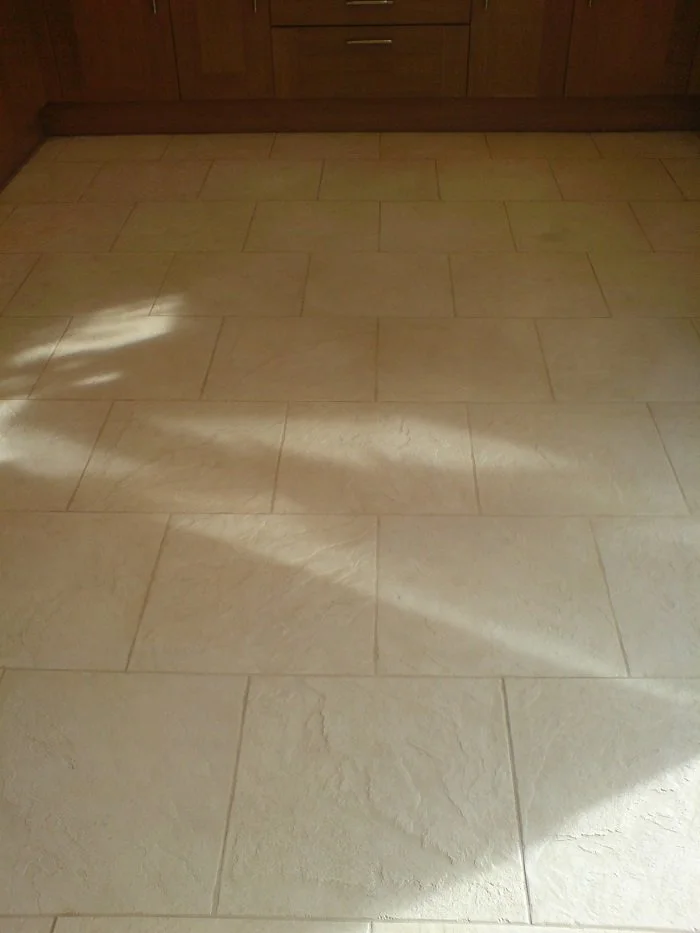
Before attempting the task of tile and grout floor cleaning, it would be a big help if you first identified what the tile is made of. This may be slightly tricky in some cases, as in today’s wide ranging floor tile marketplace one material may be made to replicate another.
This is more commonly found in ceramic tiles that are made to replicate slate or stone. To the uninitiated it will be hard at first glance to tell whether the tile on the floor that appears very much like slate or stone may in fact be ceramic.
One of the giveaway signs with ceramic or indeed porcelain tiles that appear to be stone is that they usually have a repeated pattern and once you start to look more closely you can identify that the tile is in fact the same throughout. Whereas with natural stone or slate floor tiles although at a cursorily glance the tiles may look the same when you look closer you will see that each tile has slight variations. Knowing what your tile is will make it easier to make a choice when it comes to purchasing an appropriate cleaning solution.
There are certain acid or alkaline based chemical that should not be used upon natural stone. It is advisable to check first on the packaging and always ensure if strong chemicals are used an appropriate neutralising solution is applied so the chemical does not continue reacting on the stone surface causing damage.
Ceramic and Porcelain tiles are generally more robust and hard wearing and will not be so affected by stronger chemicals. Caution should always be adopted when using any strong or abrasive cleaning agent on any surface and it is advisable to try a small test area first before launching into a full scale application of the solution.
Once you have identified your tile type you can then purchase an appropriate cleaning chemical for the task ahead. Make sure you read the instructions and use the correct dilution rate for the task; most labels will give you varying rates for lightly to heavily soiled floors.
If your tile has a smooth finish it should be relatively easy to clean without too much effort. If it has a textured finish you will find it harder to clean as soiling builds up in the ridges and crevices. With all tiles the most difficult part is usually cleaning the grout. Grout is a cement based product used to fill the gaps between the tiles. As it is cement based it is also prone to be porous and light colour grout often stains easily if it has not been sealed. Grout sealer can be purchased in many tile stores.
A good method of cleaning grout is to pre-soak it for a while and use a fairly stiff brush to agitate the surface prior to mopping or wiping clean with a sponge, repeat the process for heavily soiled grout.
As with all things that are heavily used like our floor surfaces, the more regular the task of floor cleaning can be performed, the better the surface will appear. It is advisable even with hard wearing floor tiles to set up a regular schedule for cleaning. One of the most common causes of a place appearing grubby or unsightly is a soiled floor. How many times have you walked into a café and after looking at the floor thought I don’t fancy eating here?
Steven Rosen is the Director of Simply Floor Cleaning Ltd. A Specialist Stone Floor Cleaning Company. For information on floor cleaning and maintenance visit us at http://www.simplyfloorcleaning.co.uk/slate-stone-cleaning