Cleaning Limescale Deposits from Slate and Stone Floors
Limescale deposits can be a real issue if left to accumulate upon surfaces. They often affect taps, sinks, hand basins and tiled floor and wall surfaces. The mineral deposit builds up into an unsightly mess eroding the surface that it bonds to. When this happens to floor surfaces the resulting mess can turn a bathroom sanctuary into a bathroom nightmare.
Regular cleaning with a limescale preventative product of any surface that is in regular contact with a hard water source will help to avoid this issue arising in the first place.
However it’s often the case that the limescale deposits build up over a period of time unnoticed. Most of the issues related to limescale deposits remain unseen until they become apparent when there is a problem.
This may be noticed in your kettle for instance when it stops working efficiently due to limescale deposits effecting the element. The same process happens in all unprotected water systems and your shower, boiler or machinery can fail due to the issue.
Surface deposits that are more commonly visible are noticeable by a distinct white accumulation of a calcium carbonate on bathroom utility counters walls and floors.
Some floor surfaces are more susceptible to damage than others. Polished or sealed stone and slate floors often lose their surface protection by the effects of limescale in the water supply and if left untreated the limescale will etch into the stone surface and leave it damaged.
There are a range of solutions to this issue on a scale of spending a few pounds to purchase a limescale remover solution from a supermarket to purchasing and installing a system that filters and treats your entire water supply reducing or eliminating the limescale at the point of entry.
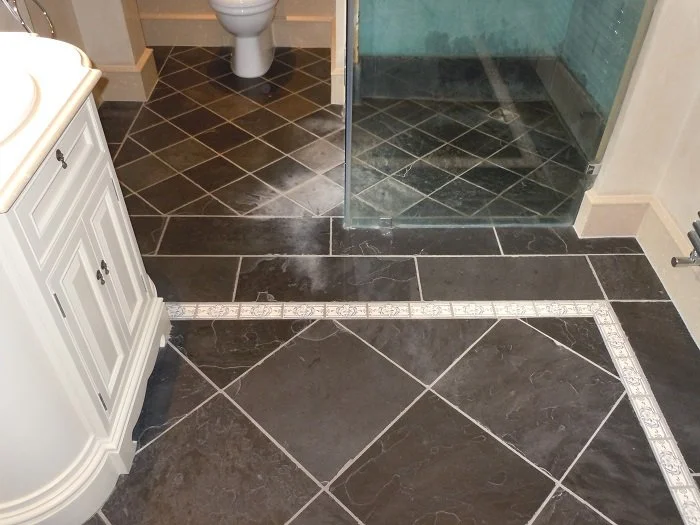
If your floor looks like the one in the above photo and you want it to be restored you may need a specialist floor cleaning company to help.
One of the issues with using strong chemicals to remove limescale from stone or slate floor surfaces is that the product can actually mark the slate or stone and remove any seal that is there to provide protection.
When cleaning slate floors it is always important to read the directions of use on the label prior to spraying the product onto Slate or Stone. This also goes for any other surface as well that you wish to remove limescale from.
I have visited many jobs where cleaning products used inappropriately on surfaces or excessive scrubbing to remove the hard mineral with an abrasive pad has made the situation worse. Often causing real damage and in the worst cases leading to the surface requiring replacement.
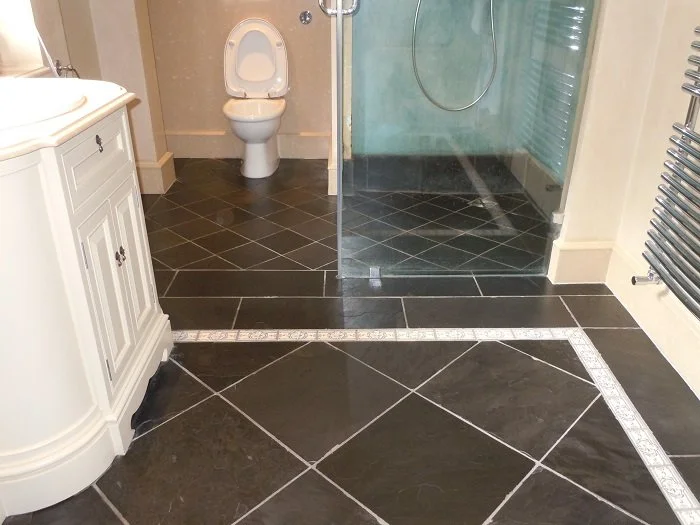
When tackling removal of limescale from natural stone or slate the surface will usually require treatment after with an enhancing sealer to restore the colour of the slate or stone.
If the stone floor surface was a highly polished surface such as marble or a finely honed and polished Limestone or Travertine a re-polishing of the surface will be required to restore the natural shine. The extent of work will be dependent upon how badly affected by the limescale the surface is.
In most cases a deep clean using a rotary hard floor cleaning machine and a diamond maintenance pad will remove any surface variations. The floor can then be restored by a polishing process using a compound powder.
For a fast assessment of your floor condition and an online estimate, upload your measurements and photos in our Get a Quote form.