
Slate Floor Cleaning in Chelmsford
Cleaning slate after building work
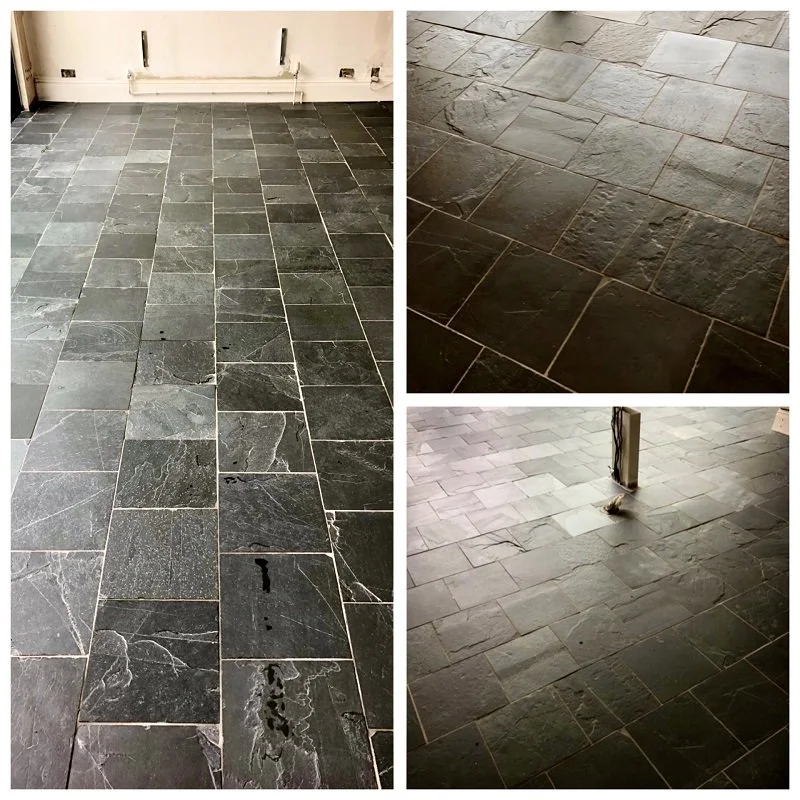
Slate Floor Cleaning
Slate floors often get messy during building work. Even with protection, gypsum dust and cement residue can still reach and contaminate the surface.
When a slate floor gets this dirty from building work, deep cleaning is usually the only way to restore it.
Our clients in Chelmsford added an extension to the back of their home and needed to match new slate flooring with the original. After knocking down some walls and finishing the building work, they saw a big transformation. They asked us to restore the slate floor before their new kitchen was installed.
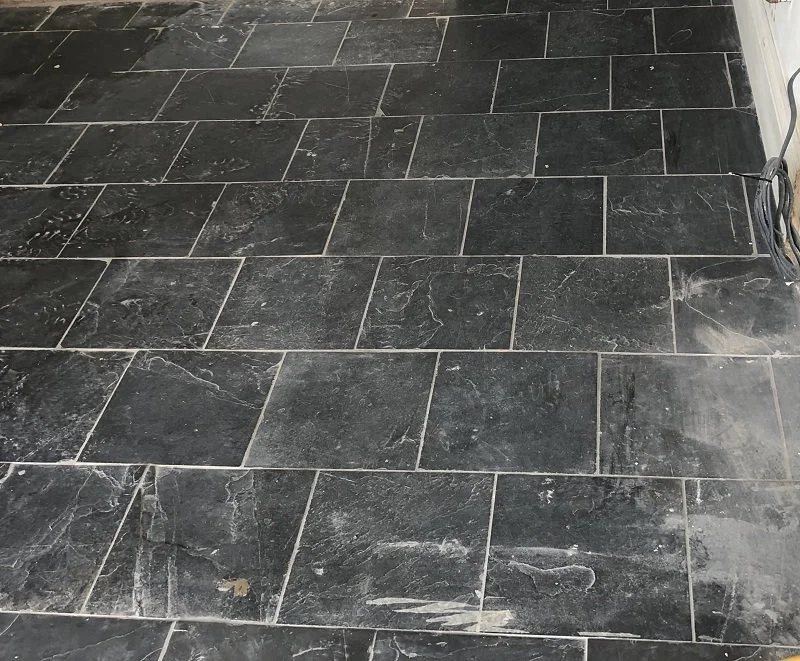
Slate floor with building work muck
The first step was to remove the construction mess stuck to the floor. Materials like gypsum, cement, and grout often cling to the slate and settle into its crevices. Regular cleaning usually can’t remove this debris, so a mild acid wash is needed to dissolve what’s left from building work.
The solution is mixed carefully and applied to the slate, where it starts to break down the debris. Next, a rotary floor scrubber with a medium nylon brush is used. The machine’s weight and scrubbing action remove most of the mess, and a strong wet vacuum collects the leftover slurry.
Some debris still remains after chemical and machine cleaning, so detailed hand cleaning is needed to finish the job.
After most of the builder’s residue is gone, the next step is to clean the slate surface and remove any old sealant that has worn away from use or construction work.
This stage also uses mechanical cleaning, but with a fitted pad instead of a brush. A cleaner-and-stripper solution is used, which works differently from an acid wash. The rotary pad scrubs closer to the slate, and once the old sealant and dirt are loosened, a wet vacuum removes the residue.
This process uses harsh chemicals and requires expert knowledge to perform professional slate floor cleaning safely and effectively.
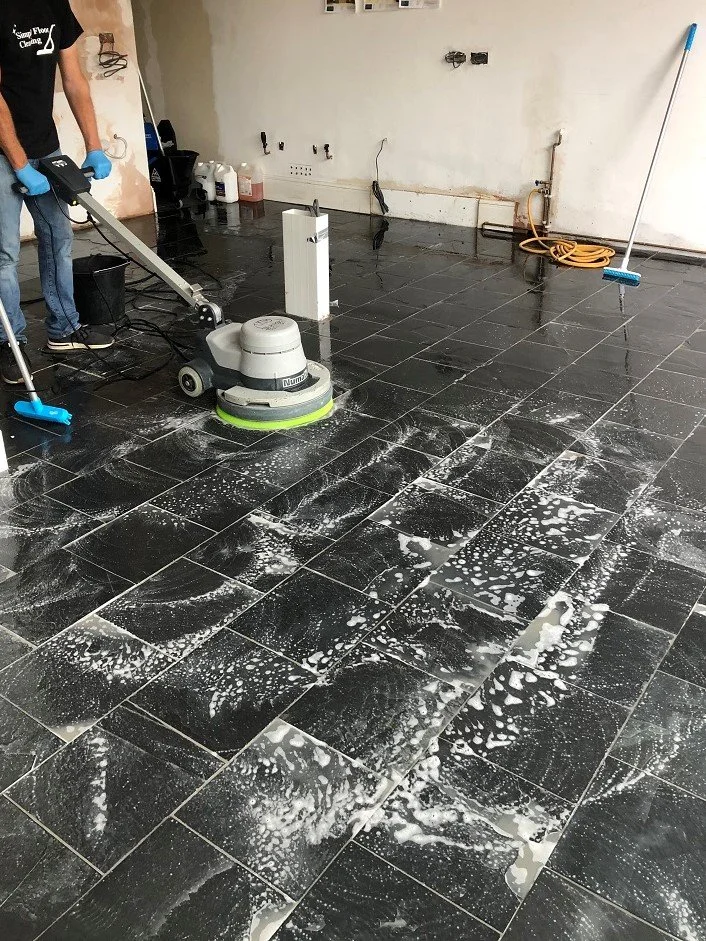
Cleaning up Slate After Building Work
After cleaning is done, the next important step is neutralising the surface. Since many chemicals have been used, it’s important to wash the area thoroughly with fresh water before moving on. We usually rinse the floor four or five times, changing the water every five to ten square meters. It takes a lot of buckets, but this step is necessary.
When the slate is fully prepared, it must be completely dry before you can apply any sealers. We use a large floor dryer and make sure the whole surface is ready before putting on the enhancing sealer.
There are different ways to apply sealer, but for slate floors, we prefer a traditional method. We apply the sealer by hand with cloths, which takes more effort, but it helps us achieve the best results. Rubbing the sealer into the crevices and layers of the slate makes sure the surface is fully covered and looks great.
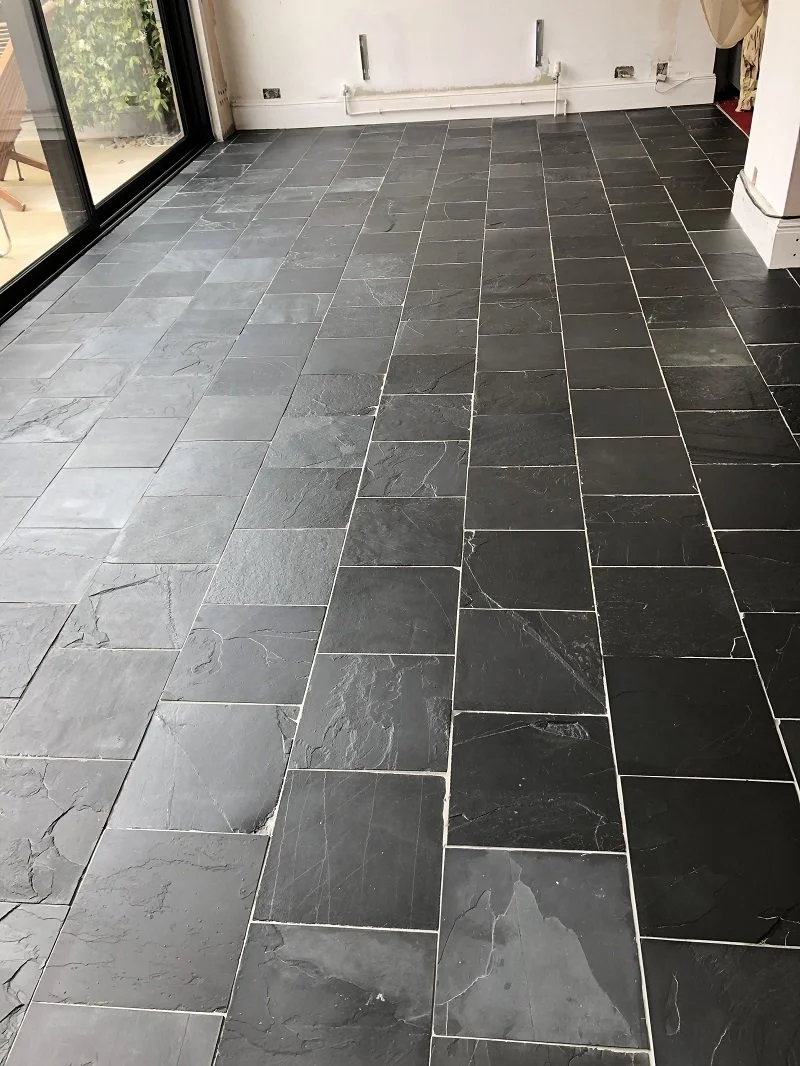
Slate Floor Cleaned and Sealed
If you need help with deep cleaning and restoring your slate floor, we can give you an estimate without visiting your home. Just upload some photos and measurements using our form, and we will provide our recommendations and a cost estimate.