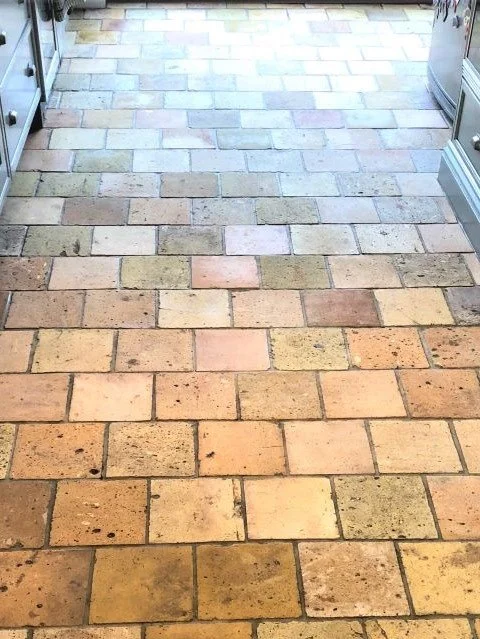
cleaning old terracotta tiles
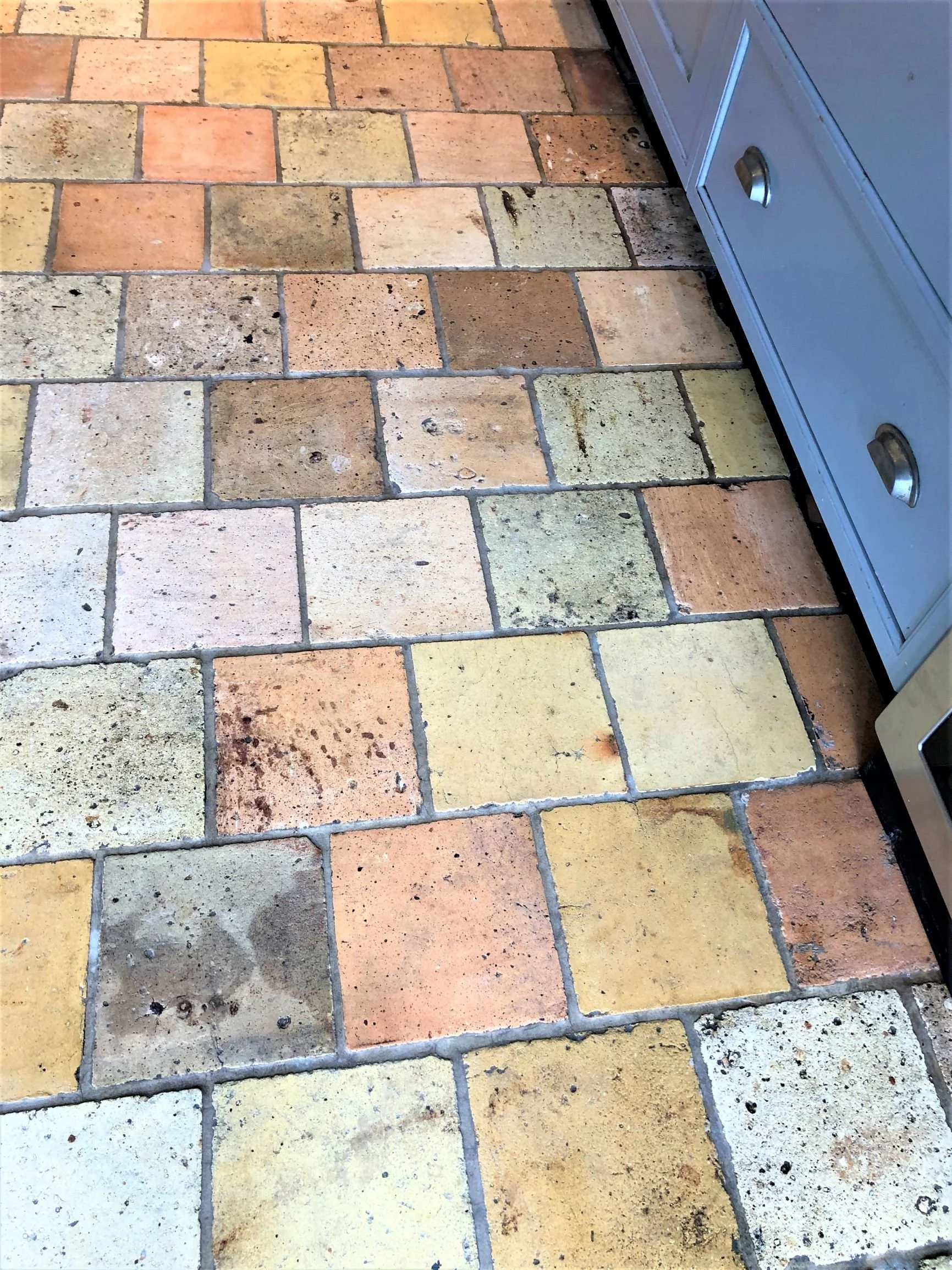
Old Terracotta tiles are rich in colour and have a texture that oozes rustic appeal. One often conjures up an image of an old country cottage floor, with stand alone wooden cabinets and a gleaming old Aga range.
Now the picture is painted, let’s take a closer at the floor.
Terracotta tiling has certainly been used as far back as ancient Greece. Italians also revered terracotta as a desirable material and widely installed it during the Renaissance period for their church floors.
The desire for the appearance that the material has in buildings, permeated through time and the Victorians graced their kitchens, sculleries and hallways with it.
Many of those original tiles laid over a hundred years ago can still be found in Victorian houses.
Over that period of time they have served the occupants well but have obviously suffered a fair amount of wear, not to mention various products that have been used to clean and protect them.
Cleaning old terracotta tiles as you may well now imagine, is a job that requires a lot of effort.
In nearly all cases the tiles will have absorbed dirt into the rough and porous surface and cleaning them up will take a measured approach.
The first part of the process should involve a chemical solution to break down old polish or waxes that would have been applied.
Be careful and ensure that any sensitive surrounding surfaces are protected because the stripping chemicals have the potential to remove some paints and mark stainless steel and similar surfaces.
Once the area is prepared, allow the solution to soak on the tile surface. It may take some time for the chemical to activate and begin to break down the old polish/waxes. Maintain the level of moisture on the tiles and do not allow it to dry up or absorb into the tiles.
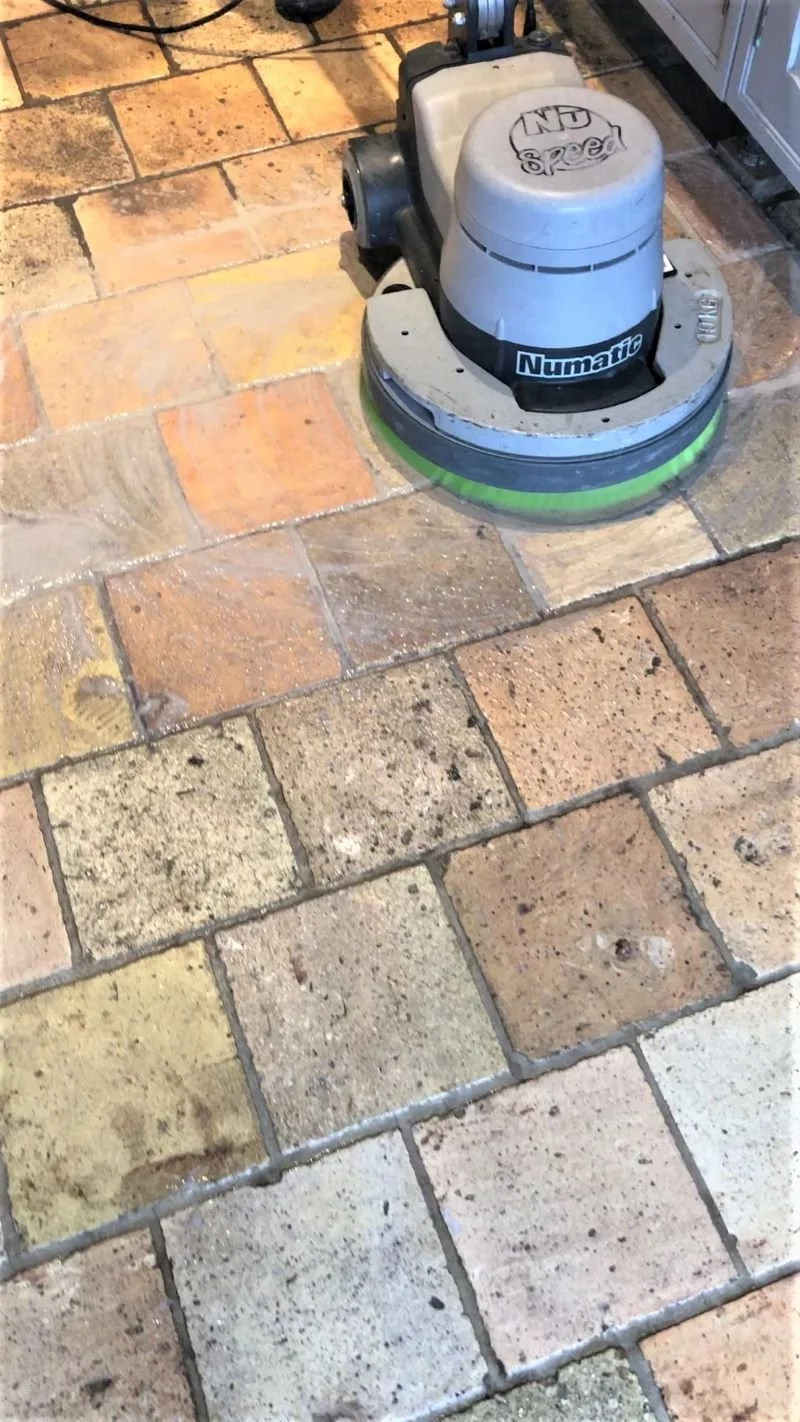
When the floor cleaning solution starts to do its work, the next stage is to clean the tiles by mechanical and manual scrubbing. It often requires several passes over the tiles and grout to begin to loosen the impacted soiling that has penetrated the tile surface.
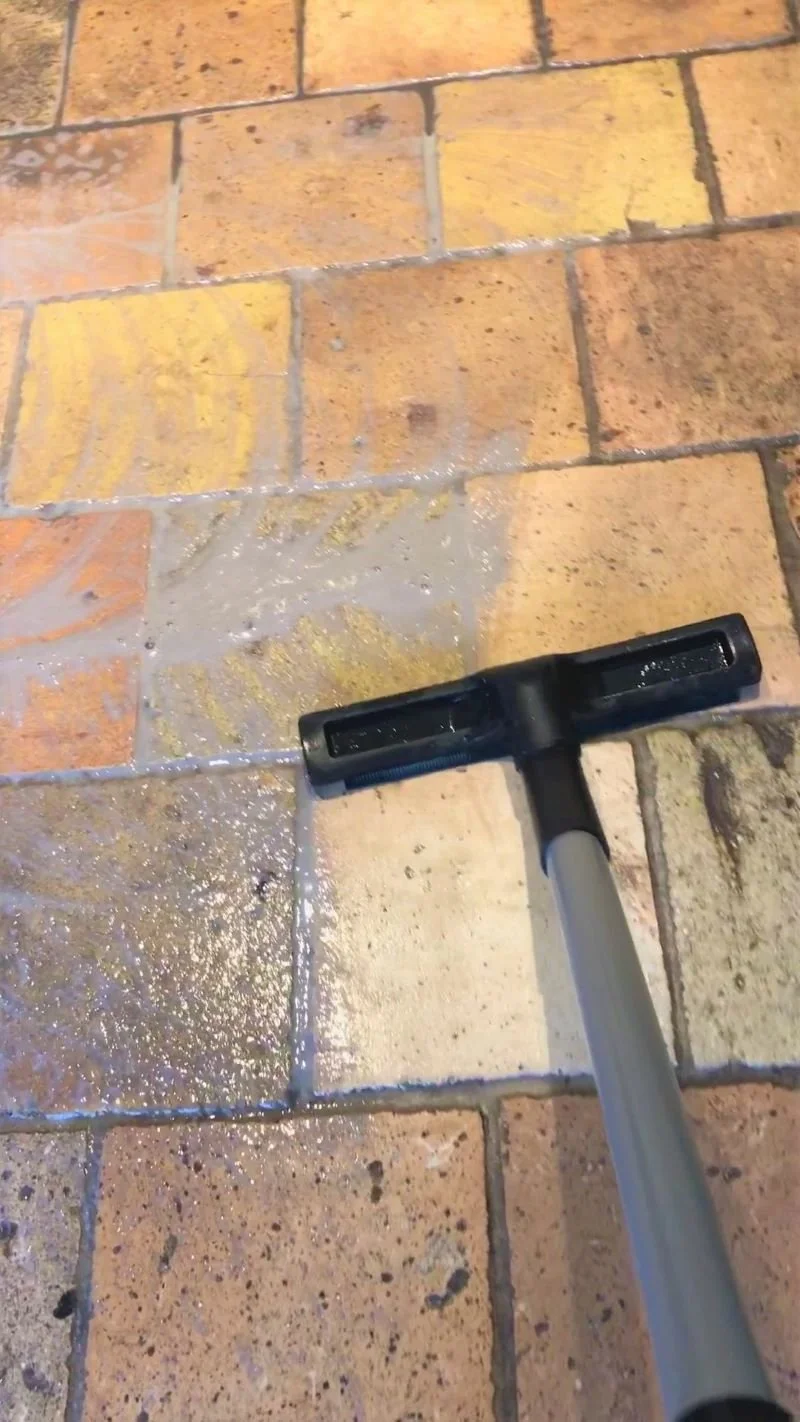
An important factor before the resultant slurry has the chance to sink back into the surface is to remove it. The most effective method by far is using a wet pick up vacuum.
A decent extraction method can suck up and capture the slurry and will reduce the volumes of mopping that is required.
The next stage using clean water and ensuring that it is refreshed regularly, mop the entire floor several times to remove surface residue.
Once that part of the tile and grout cleaning has been finished, it will be possible to look closer and hone in on any areas that require more attention.
It’s worth noting here, that the tile surface will never be 100% perfect. (Remember how many generations these tiles have served) By spending time and attention to the tiny detail, the overall finish will be much more desirable.
When the cleaning process is complete, wash the floor over a couple more times to eliminate any residual chemicals and allow to thoroughly dry.
Having spent all that time and effort cleaning the old terracotta tiles, it’s advisable to seal them to protect the material from staining and further soil penetration.
There are various products for sealing terracotta tiles and depending on your preference, it’s worth researching the finished appearance you desire.
The application of the optional products varies as does the ongoing maintenance.
For further advice or if you wish to book our floor cleaning service, please use the link for our get a quote form or feel free to give us a call 0800 1013105