
Clean Room Floor Deep Cleaning
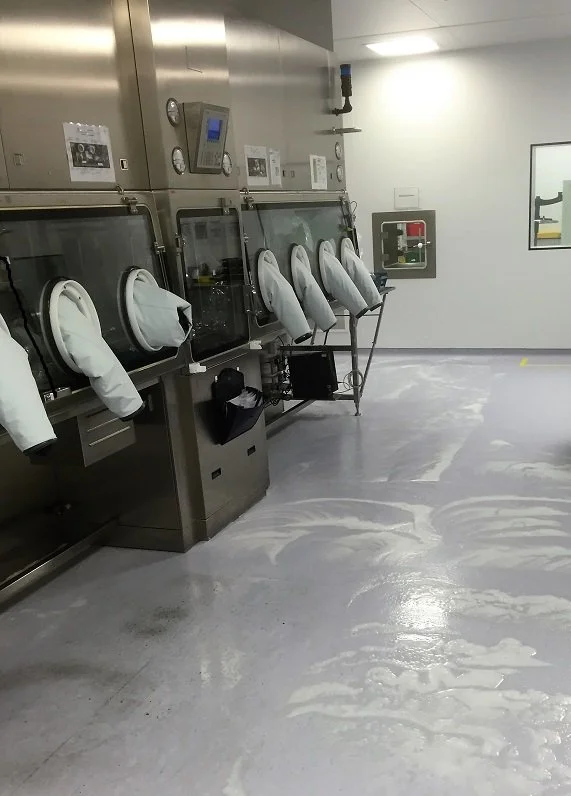
Deep Cleaning Vinyl Flooring
Cleaning in highly sensitive environments, such as clean rooms, presents additional challenges to an already demanding task.
Environmental sensitivity is closely monitored and controlled to prevent contamination and maintain containment.
Pressure-controlled changing areas prevent contaminants from entering or leaving. All equipment must be decontaminated before entering the clean room.
These requirements increase the effort and energy needed for deep-cleaning floors. Most cleanroom floors are vinyl, sealed with a removable polish.
Stripping old polish and deep-cleaning vinyl flooring are demanding, skilled tasks. Any shortcomings in the process are evident in the final result.
Limited access to water and waste facilities is another significant challenge. Each time water must be replenished or disposed of, staff must go through the changing process to move between the clean room and external areas.
The process requires donning and removing gowns or full body suits, covering head and facial hair with hair nets, sanitising hands, and wearing protective gloves and shoe covers.
Of course, when wearing all that protective clothing and doing the very physical task of deep-cleaning vinyl flooring, the work gets very hot and uncomfortable.
Air pressure can also affect the cleaning process. Stripping old polish begins with pre-soaking the floor using a diluted chemical polish remover.
To ensure the chemical remains active, the floor must stay wet. Air pressure can accelerate drying, so it is essential to keep both the current and next floor sections wet.
The chemical should remain on the floor for at least 20 minutes on lightly polished surfaces and up to an hour on heavily polished ones. The polish should then be soft enough to remove with a rotary floor machine.
A weighted machine is recommended, as the weight can be adjusted based on how stubborn the seal or polish is.
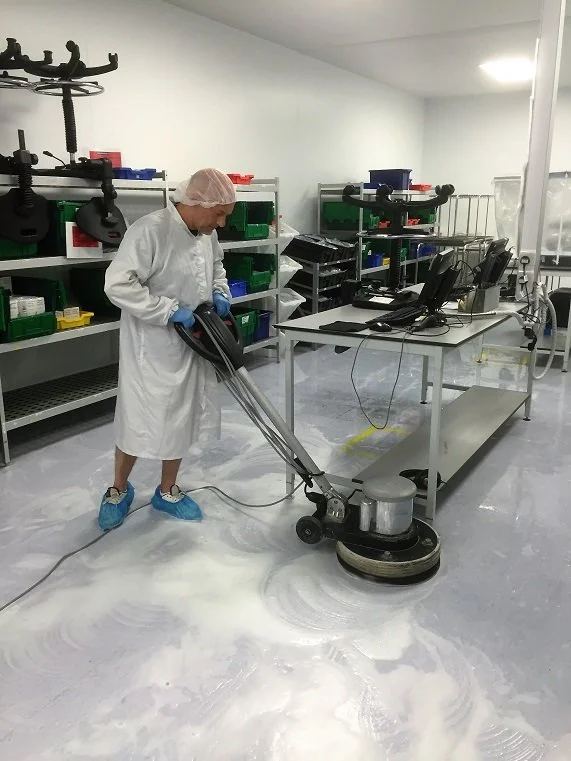
Commercial Floor Cleaning in a Controlled Environment
Once the floor polish has debonded from the vinyl surface due to agitation and scrubbing, the resulting slurry on the floor needs to be removed with a powerful wet-extraction vacuum.
After removing the polish from the surface, the next stage is to ensure the floor is fully neutralised and that no residue or chemical remains.
The best method is wet mopping the floor several times. During mopping, as soon as the water looks cloudy, it must be refreshed.
Once the floor is clean and has dried, the new polish or sealant can be applied.
Two coats of a good brand polish should give the floor a good seal and leave it looking fresh and vibrant.
The best method for applying the polish is to use a flat mop and ensure it is applied evenly.
The first coat should be applied in one direction across the floor. After it has dried and the floor has rested for a suitable period, the second coat can be applied in a cross direction to the first.
This should ensure that the floor gets fully covered, leaving no bare spots.
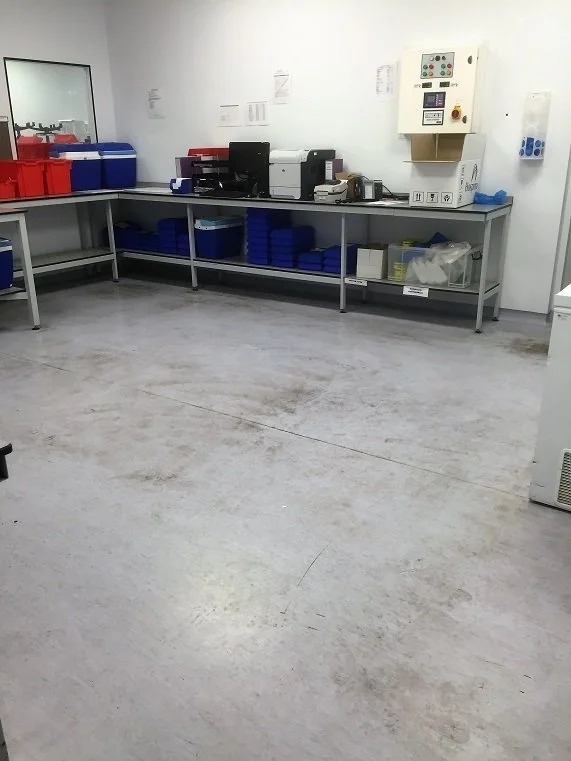
Commercial Floor Cleaning
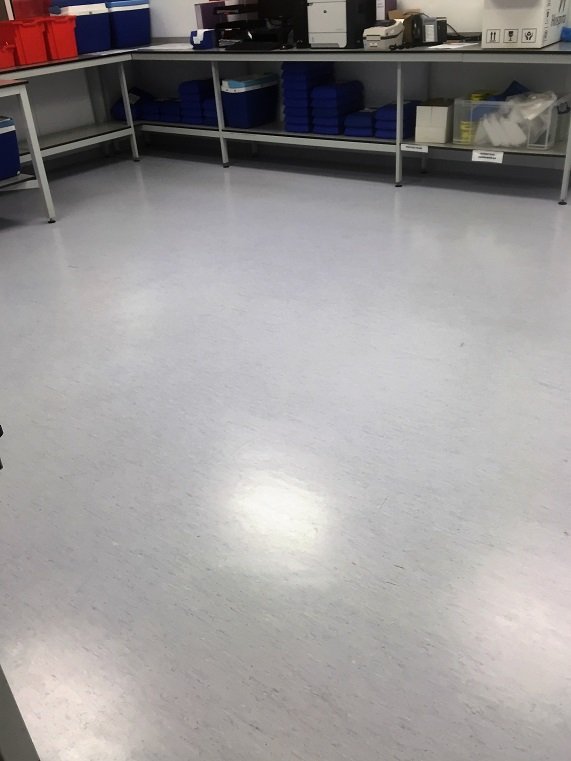
Commercial Floor Cleaning by Simply Floor Cleaning