
A Guide to commercial floor cleaning
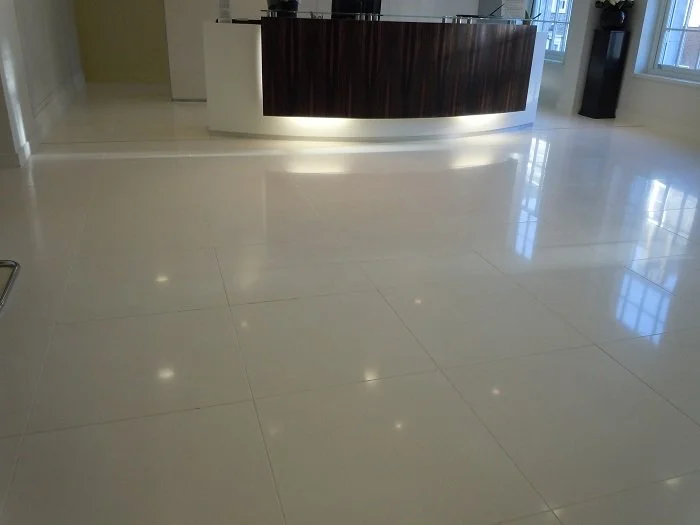
Polished Limestone Reception Floor
There is no single way to clean hard floors in commercial buildings. Each cleaning schedule should be practical, suitable for the specific type of flooring, and take into account how often the floor needs cleaning.
Most commercial hard floors should be cleaned every day. The routine should include removing dust and a light, damp clean. This basic service keeps the floor looking good and removes surface dirt and contaminants.
The level of cleaning needed will vary from place to place. It should be adjusted to fit the site’s needs, how it is used, and the type of flooring.
If your commercial floor looks very dirty or worn, you may need to change how often you clean it or the way you clean it. The cleaning product might also not be right for the amount of dirt or the type of floor.
Some products work very well on certain hard floors but can be unsuitable or even harmful for others. It’s best to find out what type of flooring you have and choose a product made for it rather than a general floor cleaner.
For example, a cleaner that works well on polished wood or vinyl floors, especially if it has a polish enhancer, can leave a natural stone or porcelain floor looking smeared.
Some common problems that lead to dirt building up on floors include:
Inadequate entrance matting: Most dirt and dust come in from outside on shoes or delivery trolleys. A good entrance mat will catch much of this dirt before it reaches the hard floor.
Inadequate cleaning frequency: It’s better to prevent dirt buildup than to fix a problem later, so make sure dust and dirt are removed daily.
Poor cleaning methods: This includes using the wrong chemicals. Not changing the cleaning solution or water often enough can spread dirt rather than remove it.
Safety flooring can be hard to keep clean without the right tools. As health and safety have become more important in many commercial buildings, flooring manufacturers now make non-slip floors to reduce the risk of slips and falls.
Slips, trips, and falls cause many workplace accidents, and safety flooring helps prevent these problems.
The main challenge with this type of flooring is keeping it looking clean and fresh. Even with daily cleaning, it can quickly collect dirt and start to look dull.
Most safety flooring manufacturers recommend regular deep cleaning to keep the floor looking good and performing as it should.
Commercial buildings have many types of flooring, each chosen for a specific purpose. Over time, the use of a building can change, but it is not always practical or affordable to replace the floor every time.
The best way forward is to identify the type of flooring in your building and choose the right cleaning method. Many commercial hard floors can be restored with deep cleaning or a full restoration process.